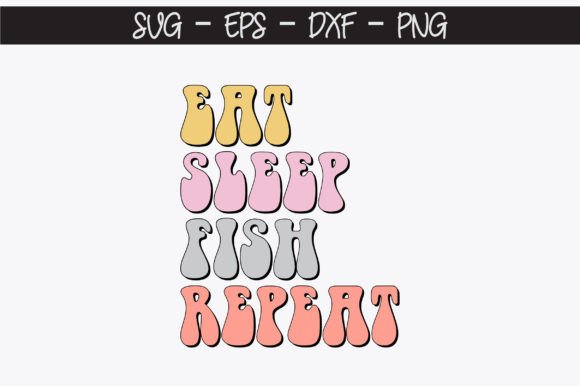
Eat Sleep Fish Repeat Retro Svg Design
When I first opened the file for Eat Sleep Fish Repeat Retro Svg Design, I didn't just see a vector; I saw a mood. There is something undeniably nostalgic about the retro aesthetic, and this particular design captures that vibe without feeling dated or cluttered. As someone who has spent years turning digital files into tangible stitched goods, my initial reaction was practical: "Does this translate well to thread?" The answer, after running some tests on various fabrics, is a resounding yes, provided you understand the nuances of how it stitches.
The layout creates an immediate sense of rhythm. The phrase itself suggests a lifestyle, which makes it perfect for the kind of handmade products that tell a story. Whether you are a crafter looking to build a brand identity or a small business owner stocking your Etsy shop with unique items, this Graphics asset offers a versatile starting point. It feels like the kind of design that belongs in a workshop, a boat house, or a cozy kitchen corner. But before you rush to order fifty shirts, let's walk through exactly how this design performs when it hits the hoop.
From Screen to Stitch: Real-World Application
I recently took Eat Sleep Fish Repeat Retro Svg Design out of the digital realm and onto a canvas for a real client project. The goal was to create a custom embroidered tote bag for a local fishing tournament organizer. The client wanted something that felt approachable but professional, not too serious but clearly tied to the theme. This design fit the brief perfectly.
The challenge with any text-heavy embroidery file is ensuring legibility while maintaining the artistic flair. In this case, the retro font choice adds character, but it also demands attention during digitization. When I ran the file through my machine, the satin stitch on the lettering held up beautifully against the heavy canvas of the tote. The curves of the letters flowed naturally, avoiding the puckering that often plagues blocky fonts on soft materials. However, if you were to try this on a stretchy jersey t-shirt, you would need to be very careful with your stabilizer choices to prevent distortion.
This versatility extends beyond bags. Imagine applying this design to a sweatshirt for a winter holiday gift, or perhaps a baby onesie for a future angler. The design's clean lines make it adaptable for custom apparel ranging from aprons to pillow covers. It works particularly well as a central focal point on larger garments where the retro style can breathe. For smaller items like caps or patches, the scale becomes critical. If the design is too large relative to the curved surface of a hat, the text might become difficult to read once stitched. Always verify your hoop size against the dimensions of the final product.
Navigating Fabric and Texture Challenges
Not all fabrics play nice with every design. While Eat Sleep Fish Repeat Retro Svg Design shines on medium-weight cottons, linens, and denim, there are scenarios where caution is required. Textured fabrics, such as bouclé or thick fleece, can obscure the finer details of the stitching. The retro elements rely on clear definition to maintain their charm, and a fuzzy background can turn crisp lines into a muddy blur.
Similarly, thin or highly stretchy fabrics present a risk. Without adequate support, the density of the fill stitches could pull the fabric, causing the design to look warped even after washing. I recommend testing on scrap fabric first to gauge how the material reacts to the tension. If you are working with dark fabric, ensure your thread colors offer sufficient contrast. A light retro palette on a navy background might lose its pop unless you use a high-density underlay or a bright white backing thread.
Dense stitch areas are another consideration. If the design includes significant fill work, it may feel stiff on delicate items like a child's shirt or a lightweight tea towel. In these cases, adjusting the stitch density or simplifying the fill pattern can improve the hand-feel of the finished product. Remember, the goal is a garment that people want to wear, not one that feels like wearing a piece of armor.
Building Value and Brand Consistency
For Crafts enthusiasts and entrepreneurs, the visual appeal of your product directly impacts customer trust. A well-executed embroidery project signals quality and attention to detail. When a buyer sees a clean, professionally stitched design on a boutique product, they are more likely to perceive value in the item. Eat Sleep Fish Repeat Retro Svg Design contributes to this perception by offering a cohesive look that aligns with current trends in vintage-inspired aesthetics.
This design is excellent for creating a consistent brand voice. Whether you are selling personalized gifts at craft fairs or listing items on a digital marketplace, using a recognizable motif helps customers identify your work instantly. The "Eat Sleep Fish Repeat" theme resonates with a specific demographic, allowing you to target your marketing efforts effectively. It transforms a generic piece of merchandise into a statement piece that speaks to the wearer's passions.
However, consistency also means knowing when to step back. Not every product needs this design. Overusing a single graphic can dilute your brand's uniqueness. Use it strategically for signature items, limited edition drops, or seasonal collections like holiday gifts. For commercial embroidery projects, ensure the design fits the overall narrative of the client's brand rather than forcing a square peg into a round hole.
Essential Designer Notes for Success
Before you commit to a full production run, there are several technical steps every designer should take. First, review the file formats included in the download. The availability of SVG, EPS, DXF, and PNG formats provides flexibility, but each serves a different purpose. Use the vector files (SVG/EPS) for resizing and scaling, and the raster files (PNG) for quick previews or mockups.
Always test the design in black and white mockups to check the balance of the composition. Sometimes color distracts from structural issues in the layout. Compare how the design looks on both light and dark backgrounds to ensure it remains versatile. Check small details closely; tiny elements might get lost in the stitching process if the resolution isn't high enough or if the digitization is too aggressive.
If you plan to sell finished items, confirm the licensing terms immediately. Just because you own the file doesn't always mean you have the right to sell the physical products created from it. Verify whether the license covers commercial use, especially for mass production. Additionally, inspect the stitch density settings in your software. If the file seems too dense for your intended fabric, consider editing the design to reduce the stitch count slightly. This adjustment can prevent fabric distortion and improve the longevity of the embroidery.
Finally, think about the end-user experience. Will the finished product hold up to frequent washing? Dense embroidery can sometimes trap lint or cause the fabric to fray over time. Using proper stabilizers and choosing durable threads can mitigate these risks. By taking these precautions, you ensure that your handmade product maintains its integrity long after it leaves your studio.
In conclusion, Eat Sleep Fish Repeat Retro Svg Design is a strong candidate for anyone looking to add a touch of nostalgia and personality to their embroidery portfolio. It balances style with functionality, making it suitable for everything from personal hobbies to serious commercial ventures. With careful planning and a bit of testing, this design can elevate your next project from a simple craft to a standout piece of art.